

RESOURCES
A medical cart may bring together a computer, display, diagnostic instrument, and several accessories. Each device has its own power requirements, but once they share a mobile platform, their interactions become part of the design challenge.
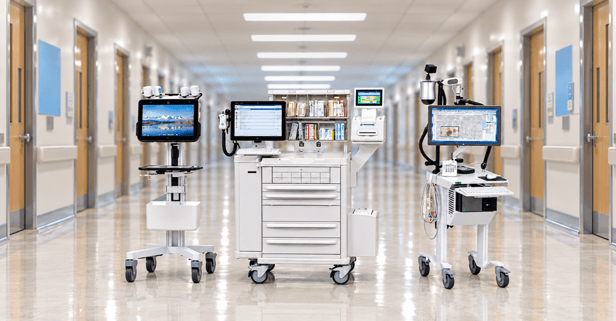
How will the equipment receive power? Does it need to operate while the cart moves? How will the system manage electrical isolation, leakage current, electromagnetic interference, and heat?
Effective medical cart power solutions begin with these questions. For OEMs and equipment designers, considering the complete power architecture early can help avoid integration problems as a design moves toward testing and production.
Start With the Cart’s Workflow
The term “medical cart” covers a wide range of applications, from clinical workstations and telehealth platforms to mobile diagnostic and surgical equipment.
Their power needs can be very different. A workstation used throughout a shift may require extended battery operation. A diagnostic cart may remain plugged in during use and need backup power only while moving between rooms. Another system may need enough reserve power to complete a controlled shutdown.
Before selecting components, define:
- Which devices must operate simultaneously.
- Whether equipment must remain powered during transport.
- How long the cart must operate away from an outlet.
- What happens if power is interrupted.
- Where and when recharging can take place.
These answers help establish whether the design needs AC power distribution, centralized DC power, battery backup, or a combination.
Size the Power System for Real Operating Conditions
Adding up equipment nameplate ratings is a useful starting point. A more complete assessment also considers startup demand, peak loads, operating modes, and future accessories.
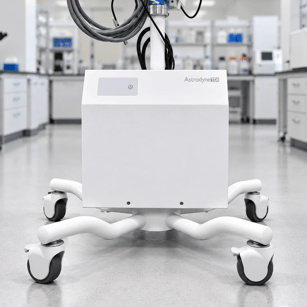
For each device, document its input voltage, continuous power consumption, and any short-duration load changes. For systems supplying AC loads, check both watt and volt-ampere ratings.
The physical design matters, too. A power supply’s usable output depends on its specified operating conditions, including temperature and cooling. A unit installed in a compact cart enclosure may operate differently from one evaluated with unrestricted airflow.
When comparing medical-grade power supplies, review the output requirements alongside mounting, connections, cooling, and relevant safety approvals. Astrodyne TDI’s medical power solutions address these electrical and mechanical considerations across a range of equipment designs.
Plan Electrical Isolation and Leakage Current Together
Electrical isolation and leakage current are important considerations when multiple powered devices share a medical platform.
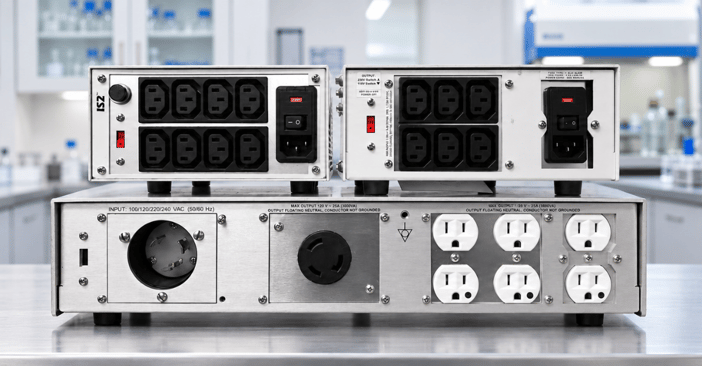
A medical isolation transformer provides an isolation barrier between the incoming supply and the downstream equipment. Depending on the system architecture, an isolation station can also provide a practical way to distribute isolated AC power to multiple devices.
However, isolation requirements depend on the equipment’s intended use, connections, and protection strategy. An isolation transformer is not automatically required on every cart, and selecting one does not establish compliance for the complete system.
IEC 60601-1 addresses basic safety and essential performance for medical electrical equipment. Applicable collateral and particular standards may add or modify requirements for a specific application.
For OEMs, the useful design question is: How will the assembled system meet its isolation and leakage-current requirements?
That assessment should account for connected equipment, protective-earth arrangements, signal connections, and the intended operating configurations. Astrodyne TDI offers medical-grade isolation transformers and power isolation stations that can support the selected architecture.
Address EMI Filtering Before Final Testing
A medical cart brings power conversion, computing, displays, and signal cables into a confined space. Their placement and interconnections can influence electromagnetic compatibility.
IEC 60601-1-2 addresses electromagnetic disturbances emitted by medical electrical equipment and systems, as well as their performance in the presence of disturbances.
EMI filters for medical equipment can help control conducted noise, but filter selection must also account for leakage current. Capacitors connected between line and earth can contribute to leakage, making filtering and electrical safety closely related design decisions.
Useful early considerations include: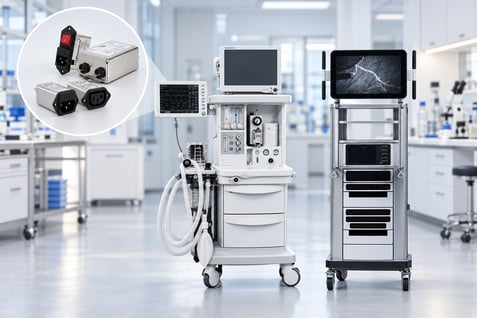
- Filter placement relative to the power entry point.
- Separation of power wiring and sensitive signal cables.
- Grounding and bonding arrangements.
- Cable routing and shielding.
- Performance with the intended devices and accessories connected.
Evaluating these factors during development gives the team more flexibility to adjust the design. Learn more about the relationship between filtering and leakage current in EMC in Medical Applications.
Match Backup Power to the Required Runtime
A medical cart UPS should be selected around the equipment it supports and the interruption it must bridge.
Short-term backup for moving between outlets is a different requirement from powering a workstation for several hours. The design also needs to account for how much interruption the connected equipment can tolerate.
Review:
- Continuous and peak load capacity.
- Required runtime at the expected load.
- Transfer behavior between mains and battery operation.
- AC output waveform, where applicable.
- Recharge time and the available charging window.
- Battery condition monitoring and replacement access.
As an illustrative calculation, a 200 W load operating for 15 minutes uses 50 Wh of energy at the load. The required battery capacity must be higher to account for conversion losses, usable discharge capacity, aging, and the desired reserve.
Use manufacturer runtime data and system testing to confirm the final selection.
Make Power Distribution Part of the Mechanical Design
Power distribution affects more than the number of available outlets. It also influences cable management, service access, weight distribution, and how easily users can connect equipment.
A well-planned medical cart power distribution system should consider connection security, circuit protection, strain relief, and access to controls. Transformers and batteries also need mounting locations that support the cart’s stability and service requirements.
Address these decisions while the mechanical layout is still flexible. Adding power hardware late can create conflicts with storage space, cooling paths, or access panels.
Evaluate the Complete Configuration
Component approvals provide valuable documentation, but the assembled medical equipment or system still needs evaluation for its intended use.
Build the verification plan around the configurations the end user will actually use, including accessories and operating modes that create demanding load or thermal conditions.
A practical design review should answer:
| Design area | Question to resolve |
|---|---|
| Power capacity | Can the system support simultaneous loads and startup demands? |
| Isolation and leakage | Does the complete configuration meet the applicable requirements? |
| EMC | How does the system perform with its intended cables and accessories? |
| Backup power | Is runtime sufficient, and does the equipment tolerate the transfer behavior? |
| Thermal performance | Can components operate within their ratings inside the enclosure? |
| Serviceability | Can batteries, fuses, and power components be accessed efficiently? |
Bringing Medical Cart Power Solutions Together
Medical cart design requires coordination across power conversion, electrical isolation, EMI filtering, distribution, and backup power.
Astrodyne TDI supports medical equipment manufacturers with standard and custom power supplies, medical isolation transformers, isolation stations, EMI filters, and UPS solutions. Considering these elements together can help OEMs identify integration needs earlier and select components around the complete application.
Designing a new medical cart or updating an existing platform? Explore Astrodyne TDI’s medical power solutions and discuss your load requirements, runtime goals, and integration needs with our team.