Types of Power Distribution Units
Choosing the right PDU is essential for safe, efficient, and scalable power delivery in server racks, network cabinets, and data center environments. Different PDU types address different operational needs, from basic power distribution to advanced monitoring and remote control.
Basic PDUs
Basic PDUs provide simple, dependable power distribution without monitoring or network connectivity. Featuring a fixed input cord and multiple outlets, they are a cost-effective option for smaller racks or applications where power visibility is not required.
Metered PDUs
Metered PDUs offer real-time visibility into power usage, displaying voltage, current, and load levels. This allows operators to track consumption, manage capacity, and reduce the risk of circuit overload—especially valuable in data center environments focused on efficiency.
Switched PDUs
Switched PDUs enable remote control of individual outlets, allowing administrators to power cycle equipment, shut down unused devices, or reboot systems without physical access. These units are ideal for critical applications where uptime, flexibility, and remote management are essential.
Monitored PDUs
Monitored PDUs provide advanced power monitoring combined with alerts and network access. By tracking electrical conditions in real time, they help identify abnormalities early and support proactive maintenance strategies.
Rackmount PDUs
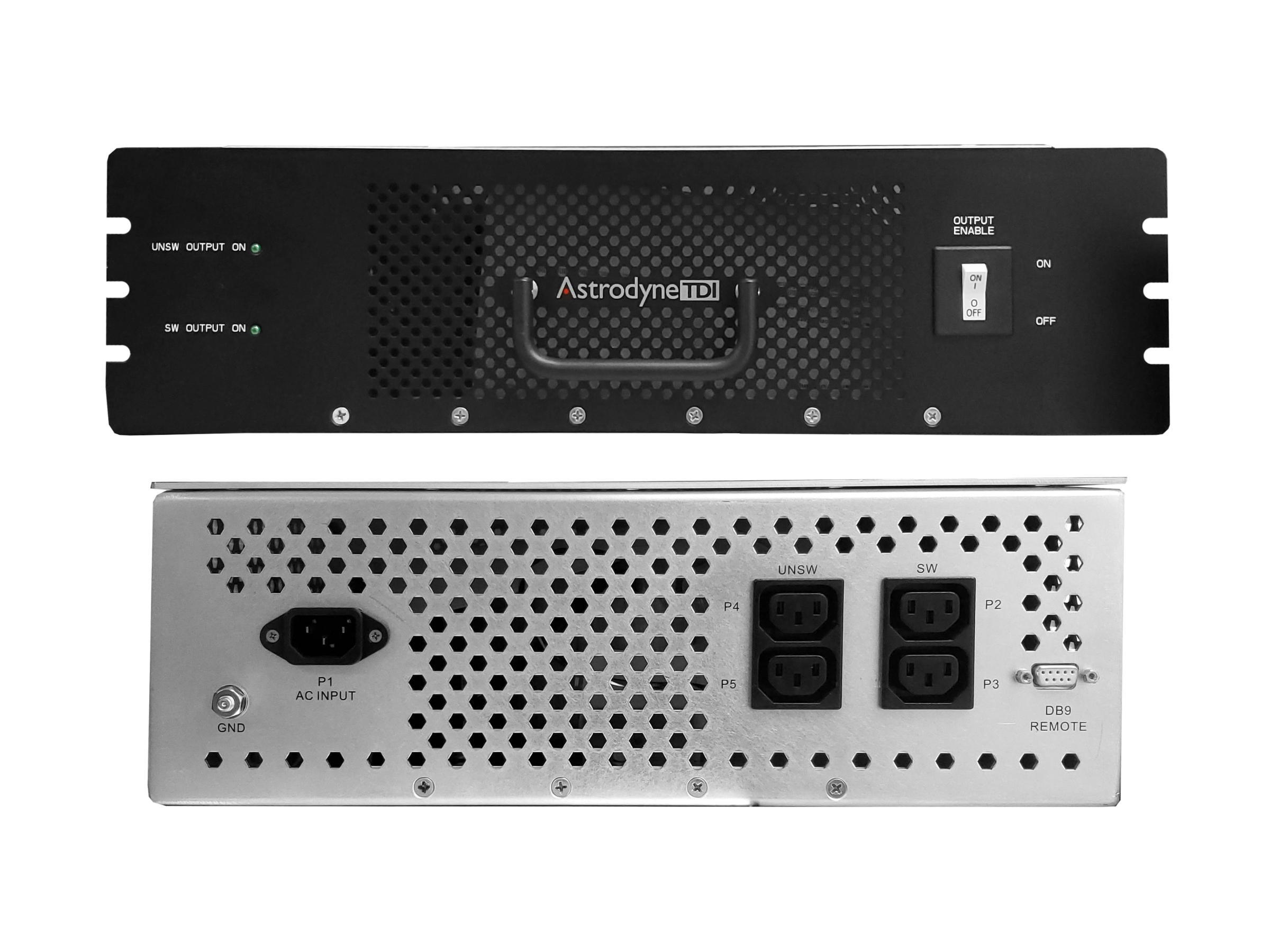
Designed specifically for standard 19-inch racks, rackmount PDUs provide a clean, space-efficient approach to power distribution. Available in multiple voltage and current ratings, they support high-density installations while keeping power organized and accessible.
Single-Phase PDUs
Single-phase PDUs are well-suited for smaller racks or facilities with moderate power requirements. They offer reliable AC power distribution across a range of voltages and are easy to install and maintain.
Three-Phase PDUs
Three-phase PDUs are built for high-power environments such as enterprise data centers. By distributing loads across multiple phases, they support higher current demands, improve efficiency, and reduce the likelihood of overloads.
In summary, whether you need a basic PDU for straightforward power delivery or a switched or monitored solution for advanced control and visibility, selecting the right PDU ensures safe, reliable operation and protects your infrastructure investment.
Rackmount PDUs are designed to support reliable power delivery in demanding environments. By evenly distributing power to connected equipment, they help prevent circuit overloads and maintain stable system performance. Centralized power distribution simplifies management and, in advanced models, enables remote monitoring and control—improving troubleshooting, uptime, and energy efficiency.
Many rackmount PDUs include protective features such as circuit breakers, surge suppression, and load balancing to safeguard sensitive electronics and extend equipment lifespan. Their rack-ready form factor improves space utilization and keeps power infrastructure organized within standard 19-inch cabinets.
Additional advantages include scalability for future expansion, optional redundancy for continuous operation, and availability of TAA-compliant models for government and defense applications. With configurable designs and multiple output options, rackmount PDUs adapt easily to evolving power requirements while helping reduce operational costs and environmental impact.
-
Output Voltage Options: Available in a wide range of voltages, including 100–120V and 200–240V configurations.
-
Input & Outlet Configurations: Supports common input plugs such as NEMA and IEC options, along with multiple outlet types to match diverse equipment requirements.
-
Current Capacity: Designed to handle loads typically ranging from 10A to 30A or higher, depending on the model.
-
Mounting Options: Offered in vertical and horizontal formats, including 2U, 3U, and 4U configurations.
-
Centralized Power Distribution: Acts as a single distribution point for all rack-mounted equipment.
-
Space Efficiency: Integrates cleanly into standard 19-inch racks and cabinets.
-
Electrical Protection: Includes safety features such as circuit breakers and surge protection to protect connected devices.
-
Load Balancing: Helps distribute power evenly to reduce stress on circuits and equipment.
-
Power Monitoring: Select models provide real-time energy usage data for capacity planning and overload prevention.
-
Remote Management: Advanced PDUs support remote outlet control, enabling off-site power cycling and system resets.


.png)
.png)
.png)
.png)